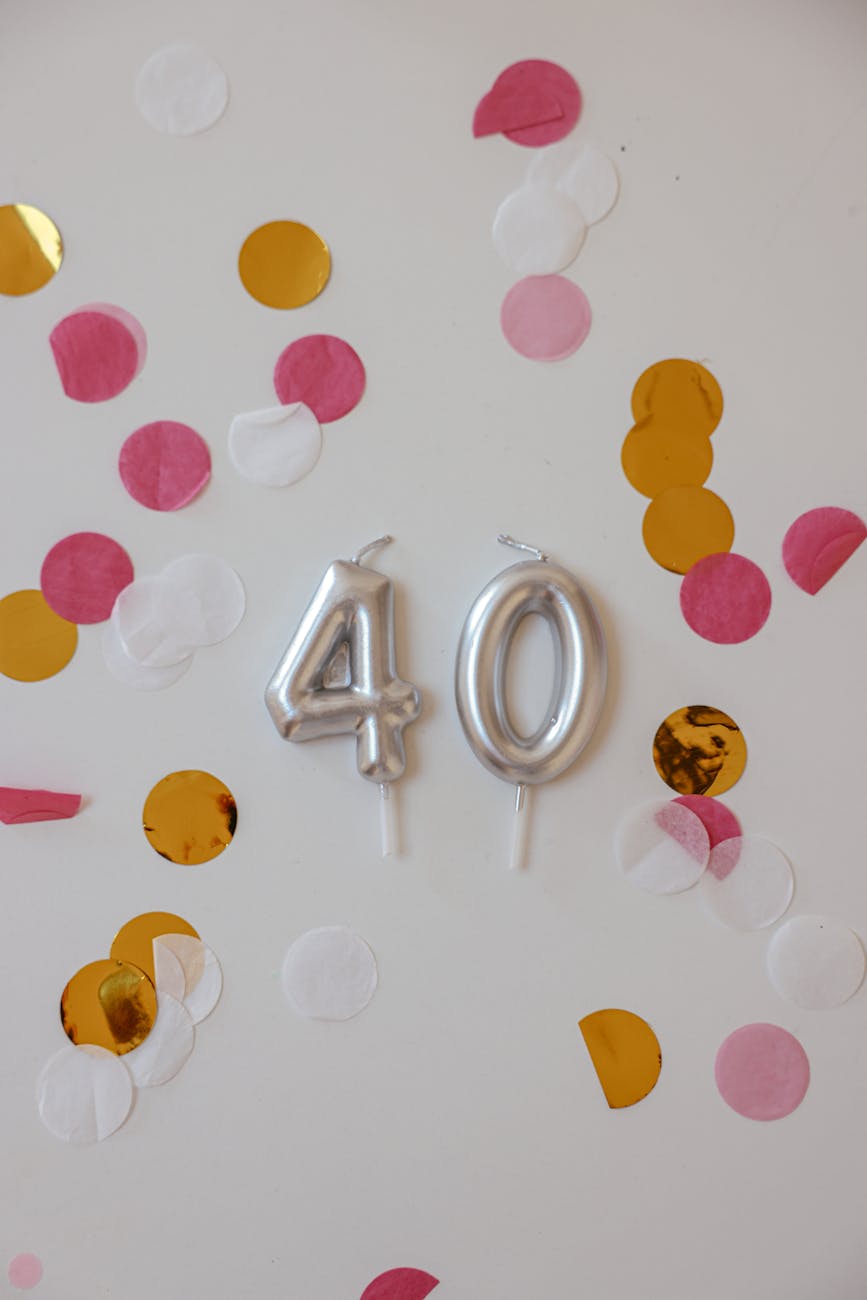
I turned 40 on July 21st of this year.
Two days before that my poppop died. He was 96.
The collision of these two milestone life events launched me into the stratosphere of anxiety around aging, aging bodies, and time. How fast it goes. How little we have.
At 40, I suddenly felt like I was no longer in the “You’re young. You’ll bounce back quickly” era of my life and now settling into the beginning phases of all the possible diseases that being young “keeps us safe from.” (Illogical, I know.)
I started doing some math. If I live until 96 that’s ONLY another 56 years. The first 40 went so fast.
I desperately wanted life to slow down.
Armed with the fear of dropping dead at any moment, I went to a pilates class because anxiety can’t find a moving target. (I mean, she can, but she also loves a workout.)
One of the class regulars was talking about her birthday coming up on Wednesday.
“I’m turning 80,” she said. “When did that happen? It’s the first time I’ve really thought, wow, that’s up there.”
I think we all have that age in our minds. The one that makes us feel like an adult. The one that is the age that we believe will define us as officially “old”.
When I hear that someone is turning 80, I don’t see that as old. So, then why am I seeing 40 as an ending? Or as the tipping point where my body will suddenly start failing me?
“How do you embrace milestone birthdays?” I asked her.
“Keep moving and have a sense of humor. If you rest, you rust,” was her answer.
I thought of poppop. At 96, he was still golfing several times a week before he died. And all my life I’d known him as someone who loved to laugh and make others laugh. There was always something childlike to me about the way he engaged with the world, which, I’m certain, is part of the reason why we, as his grandkids, were all so close to him.
Is that the secret then? Humor and movement? Because it’s not just about getting older. It’s about growing older while maintaining independence and having a good quality of life.
A few days later, I called my dad to check in.
“I bought a bike,” he said. “I think it’s time I started getting serious about being healthy.”
“Dad, you’re only now thinking about getting healthy?”
“I’m turning 70. I can’t abuse my body the way I used to. I want to make the rest of my life the best it can be. I maybe have, 20 years left, if I’m lucky. That’s a good long time.”
Twenty years is a good long time.
And here I was thinking 56 years was not enough and that I had run out of youthful luck to keep me healthy.
But here’s my dad at 70, finally “getting serious” about his health.
And here is the woman at pilates turning 80, moving her body and having a good time.
And there was poppop golfing at 96.
Maybe 40 isn’t so bad then. And neither is 70 or 80 or 96. And a body, or a number, isn’t something to be afraid of.


 Robyn Neilsen