
I got a call from one of my teacher friends the other day. They’d been at a staff meeting where one of their administrators had told them not to talk about what’s going on in the world in their classes. Maybe in history, but not in math, not in English, and certainly not in science, the administrator had said.
That’s fine, I guess. I can see where educators would want to protect their students from the overwhelming sense of dread and fear they might feel when talking about current world events like Iran, Venezuela, and ICE in Minnesota. Big feelings that might distract from lessons and impending standardized test dates. (Please read this last sentence with a tone of sarcasm because God forbid teachers be allowed to go off curriculum to tend to the emotional needs of their students.)
However…
Schools are places of community meant to be safe havens for students to learn, grow, make mistakes, express themselves, find their voices, especially in middle and high school, as students are waking up to the world. How can you say, No, we can’t talk about that. Turn to page 77. It feels counterintuitive to what the school experience should be: a place for students to ask questions and challenge the status quo.
That’s why I worked an Art as Social Protest unit into my curriculum when I was teaching high school English.
Here are some works you can read with your students to show them how books do SO MUCH MORE than simply tell a story.
#1. A Raisin in the Sun by Lorraine Hansberry
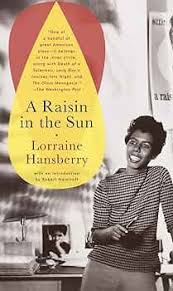
Lorraine Hansberry’s award-winning play, A Raisin in the Sun, is top of the list when it comes to art as social protest.
Written as a social commentary on racial discrimination, specifically housing segregation, the play tells the story of the Youngers, a family living on the Southside of Chicago, who buy a house in a better neighborhood with the recently deceased patriarch’s $10,000 life insurance check. However, when one of the Youngers’ neighbors comes to welcome them to their new home, the Youngers, specifically Walter, are saddled with a decision that challenges their values.
The play is about cultural and personal identity, the pursuit of the American Dream despite racial and economic challenges, and the psychological toll of racist housing policies, like redlining.
This is a great work to dive into the history and evolution of housing laws and their effect on the Black community, the Great Migration and its impact on American cities, and an analysis of Harlem Renaissance poetry, specifically Langston Hughes.
You can check out my full A Raisin in the Sun unit in my TpT store, The Bookish Classroom!
#2. The Crucible by Arthur Miller
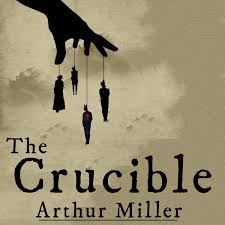
Is The Crucible by Arthur Miller a play about the Salem Witch Trials? Sort of. Is the play actually an allegory for the “witch hunts” that were happening during the anti-communist, Red Scare, McCarthy era in the U.S.? One hundred percent, yes.
The play is about a group of young girls, who begin to accuse other villagers of witchcraft to avoid punishment after they are found dancing in the woods with the Parris’s slave, Tituba. Abigail Williams, ringleader of the girls and niece of the village reverend, accuses Elizabeth Proctor of witchcraft as revenge for her affair with Elizabeth’s husband, John. John exposes his affair with Abigail as the motivation for her accusation against his wife. But when Elizabeth lies to protect John’s reputation, John is arrested for witchcraft.
At its heart, The Crucible is a social protest piece about the dangerous impact of mass hysteria, paranoia, and religious and political control on a person’s reputation, career, and ultimately, life.
For a unit on The Crucible, there are a lot of great historical videos, documents, and images to dig into, including propaganda comics and flyers, videos of the House Un-American interrogations, and stories of people whose lives were derailed by accusations of Communist leanings.
#3. Native Son by Richard Wright
I taught this book so many times I felt like the characters were my friends. Not that you’d want the main character to be your friend.
Native Son by Richard Wright is long, yes, but worth the read with students.
The novel follows Bigger Thomas, a Black man living in poverty on the Southside of Chicago with his family when he takes a job chauffeuring for the very rich, white Dalton family. When he accidentally kills Mr. Dalton’s daughter, Mary, Bigger, at first attempts to hide the murder, but eventually goes on the run, growing into the monster the world has made him out to be and making the reader wonder whether or not Mary’s murder really was an accident or a response to the way Bigger had been treated his entire life.
This is very much a novel about the psychological effects of prolonged oppression and racism. And gets into some interesting questions about nature versus nurture, what conditions it takes to turn a person into a monster, and how the world was set up for certain groups and communities to fail.
Because the story takes place in the 1920’s, you can do some great analysis of Harlem Renaissance poetry and other contemporaries of Richard Wright, (check out Notes of a Native Son by James Baldwin), as well as the impacts of the 13th amendment and the Great Migration on cities, and the Black community in the Jazz Age.
#4. Being There by Jerzy Kosinski
Well, if this book isn’t a perfect encapsulation of politics…especially in the U.S.
Being There is a satirical novel about a gardener named, Chance, who ends up being a media darling and powerful political advisor. But what people don’t realize is that the “wise” advice he gives is only instructions for gardening and that his experience of the world is through television.
In today’s culture of social media, chaotic politics, and self-obsession, Being There speaks to themes of media manipulation, the superficiality of modern culture, and how someone undeserving can be elevated to an influential position. (Influencers, anyone?)
This is a great book to have students look at social media and the rise of the influencer/content creator era, celebrities and politics, and how different outlets report the same news story. A really interesting way to look at media bias when it comes to celebrities and political figures.
#5. Beloved by Toni Morrison
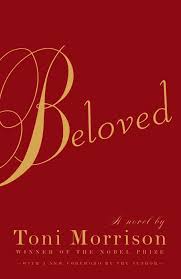
Oh how I love Beloved. It is equal parts realistic drama, historical fiction, and horror, but it’s the realism and history that make it horrific.
Beloved tells the story of Sethe, a former slave who is being haunted by the baby she murdered in an attempt to save that baby from a life of slavery. When that baby comes back, Sethe thinks she’s found salvation and that the baby has forgiven her for the murder. However, what Sethe’s daughter, Denver, and her lover, Paul D. see when Beloved returns to 124 is a soul with sinister intentions.
This book is so full to the brim with history and theme, it’s hard to know where to start. But I got you. Morrison used the story of Margaret Garner as the inspiration for her protagonist, Sethe. This is a searing work of fiction about the generational impact of slavery, what it means to be a good mother, and the definition of sacrifice.
The discussions that come from this book alone are worth doing the unit.
Which, if you’re looking for a unit for Beloved, I got one for you!
Final Thoughts
Literature is not written in a vacuum.
It is the convergence of history, personal experience, and truth wrapped up in story that does more than while away an afternoon.
Help your students find their voice and perspective on the world. Then help them tell the truth about what they see.
Literature is a call to action. And right now, we are being called to act.

 Robyn Neilsen