
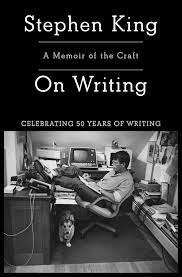
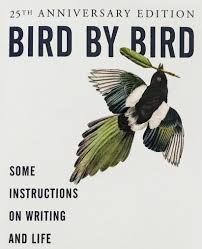
For the past few weeks I’ve been reading On Writing by Stephen King and Bird By Bird by Anne Lamott and using the lessons I learn in these craft books to help me write my third novel. I’ve also been using my favorite book, The Wedding People by Alison Espach, as examples of the craft book lessons in action.
And I’ve been documenting it all on TikTok, which loves to troll me with the search bar “millennial writing”. Well, I am a millennial who writes, so I guess it’s not too off the mark, even if millennial feels like a dirty word these days. A generation of forty somethings that makes the younger generations cringe.
But I digress.
I’ve come up with a writing schedule that will get me 75,000 words written by March 31. From Monday thru Friday, I’ll be writing 1250 words a day, a task that takes me about an hour from end to end. In my first week, I’ve hit and even exceeded my daily word goal. I am also a full time writer, so the words are my daily priority.
One of the great lessons this week that I learned from Lamott and King was about creating characters. And I’d love to share my takeaway with you here, so you can use it with your students in your classroom or in your own writing.
Stephen King Says

According to Stephen King, building characters is like writing dialogue. You have to pay attention to how real people speak and behave, then tell the truth about what you see.
I would like to add to this that if you are using family and friends as inspiration for your characters that maybe you not turn your work into a who’s who guessing game for them. Is that supposed to be me?? But I don’t talk like/look like/act like that. You’re bound to make an enemy or two if you go that route. However, if that’s what you’re looking to do, then keep on keeping on.
King says creating happens for him like this: first the story comes to him like a fossil that he has to excavate. Then, he digs around and uncovers the situation within the story that drives the events, and within that he meets the characters.
Not creates the characters. Meets. Because according to King, the characters already exist with minds and hearts and desires of their own.
And King has a hell of a time trying to make those characters do what he wants them to do for the plot. So, he just lets them decide, and as the story progresses, he learns who his characters are and how they would approach the situation they are in.
Anne Lamott Says

According to Anne Lamott, getting to know your characters means hanging out with them long enough to see beyond all the things they aren’t.
Lamott herself has confessed to making assumptions about people based on first impressions that ended up being completely off the mark. So, she tries not to make the same mistake with her characters.
When we’re meeting a character for the first time, as a writer, we are writing based on who we think that character is or who we want them to be. But the more time you spend with a character, the more gets unveiled that we could have never guessed.
Lamott says, when you write about characters we want to know about their leaves and colors and growth. But we also want to know who they are when stripped of the surface show.
What are their hopes and dreams? What do they stand to lose or gain (what are the stakes) from the situation they’re in? How has their past influenced them to become who they are now?
Character in Action: The Wedding People by Alison Espach
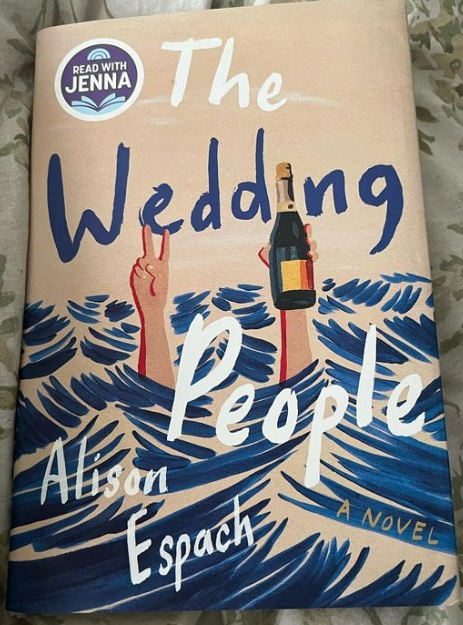
Let’s look at, Phoebe, the protagonist of The Wedding People.
We start with a situation: A woman goes to a fancy hotel to end her life. But let’s throw in a curve ball. That same weekend, there’s a wedding happening at the very same hotel. Okay. Not bad, but let’s add a little spice. Our protagonist ends up sharing an elevator with the bride of the wedding and telling the bride what she plans to do, which the bride is extraordinarily displeased with, not because she wants the protagonist to live but because she doesn’t want anything ruining her wedding.
Will the protagonist make the attempt? Has the bride given her enough to consider to make her not want to go through with it? What happened to this woman that got her to the point where she wanted to end her life?
Enter Phoebe.
An adjunct professor, newly divorced, dealing with the emotional trauma of infertility and her ex-husband’s infidelity with one of her best friends and colleagues. Poor Phoebe has been through the wringer, and all of this during Covid.
When we meet her, she has on her most beautiful dress that she never got to wear because she never went anywhere worthy of wearing it. And she’s lost. Completely and utterly, and she sees ending her life as her only way out.
But what if she survives the attempt? What does life on the other side of survival look like for her? Who does she become in the wake of a second chance?
There’s the story. How Phoebe lives these questions while we get to watch.
But How Do You Find the Right Character?
I hate to say this because it sounds both woo woo and hoekey, but they just kind of…show up.
You present the situation and then the right character for the job sort of…materializes.
There will be parts of you in there. (My current main character is a high school English teacher with general anxiety disorder. Hi. It’s me. A former high school English teacher with general anxiety disorder.)
And maybe you start with a vague idea of who this person is, but as you write, they fill in the gaps for you. I thought my main character was making decisions because she’s impulsive and jumps before she thinks of the consequences. Turns out, she makes decisions to prove to herself that anxiety doesn’t run her life. Even though sometimes, most times, that backfires. (That is not a thing I do.) But that’s all her. I made my assumption, and she said, WRONG! That’s cool. I’ll admit when I’ve made a mistake.
She’s trying to get back to the version of herself that she was before anxiety, straddling a line between who she knew herself to be and who she’s becoming. All of which informs her conversations, actions, responses, and behaviors. And even her outlook on the world.
It’s fun to write her because when I get behind the keyboard I let her take the wheel. And, I gotta say, she’s a hell of a driver. Going with her flow has made the book (WHICH I OUTLINED!) a joy to write because even though I have directions, she sometimes likes to go off roading, and I love the surprise.
The Takeaway
Have you ever heard that you won’t know the beginning of your story until you write the end? Same applies here. And as you keep returning to your story, you’ll eventually see that the character you thought YOU were writing has started to write themselves. That’s the magic.
What’s your process for creating and connecting with your characters? I’d love to know in the comments!
Looking for free, no prep creative writing activities for your classroom? Check out my store, The Bookish Classroom, and these resources:
- Picture Prompt Storytelling Activity & Lesson Plan
- Scary Story Creative Writing Prompt & Lesson Plan
Until next week, friends.

 Robyn Neilsen